
A more useful kitchen
Pantry containers that actually fit your space
A useful storage system starts with the cupboard, the food, and the way you refill it—not a matching set.
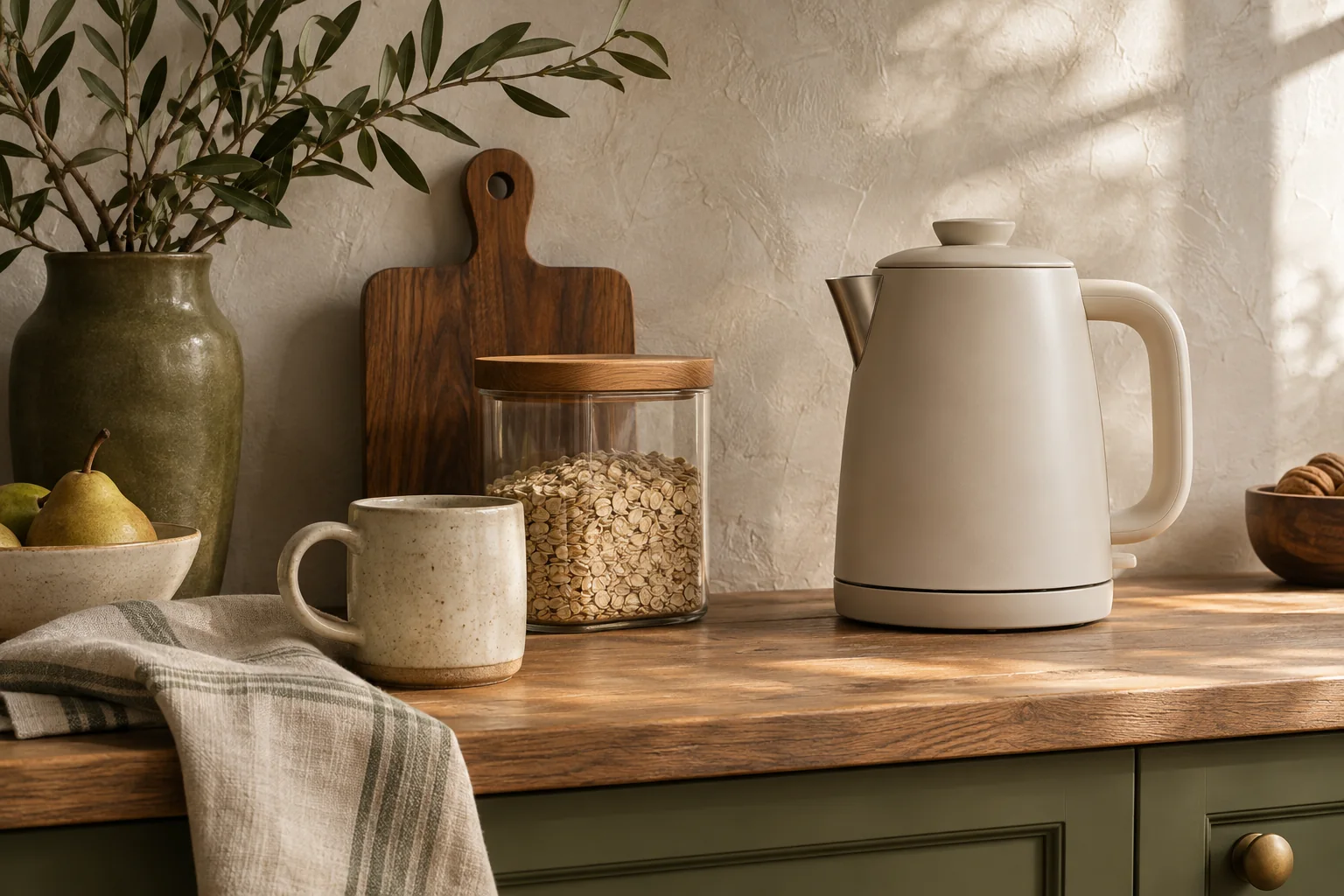
A tidy pantry is easier to keep when the containers fit your shelves and your shopping habits. Before choosing a set, look at what you buy regularly, where it lives, and how often you need to reach it. Matching lids are pleasant; a container that you can lift, open, and clean is more useful.
01Measure the shelf before the container
Check the usable width, depth, and height of the cupboard, including the space lost to hinges or a shelf lip. Leave room to lift a lid or pull a container forward. If you want to stack containers, consider whether you can reach the lower one without moving everything else.
02Match the shape to what goes inside
A tall container may suit long pasta, while a wide opening is often easier to reach with a scoop. Do not assume that a volume in liters corresponds to a particular bag weight: different dry foods occupy different amounts of space. Try the dimensions against the quantities you normally buy.
03Think through the refill
Clear sides make the remaining quantity easier to see. Before topping up, plan how you will retain the product name, preparation instructions, and relevant date information from the original packaging. Choose a labeling method that still works after cleaning.
04Check the care instructions
Look at the body, lid, seal, and any removable parts separately. The care instructions for a lid may differ from the container itself. Treat dishwasher, freezer, microwave, and food-contact claims as details to verify on the specific product, rather than assumptions about a material.
Two approaches to consider
| Approach | May suit | Keep in mind |
|---|---|---|
| A few individual sizes | A small cupboard or a short list of staple foods | Check whether replacement lids or seals are available. |
| A coordinated set | Similar shelf heights and a routine you already know | Avoid paying for sizes that will stay empty. |
Check the details at the source
These references support specific points or provide further reading. A manufacturer's guidance applies to its own products; always check the instructions for the exact item you are considering. This is a researched buying guide, not a hands-on product test.